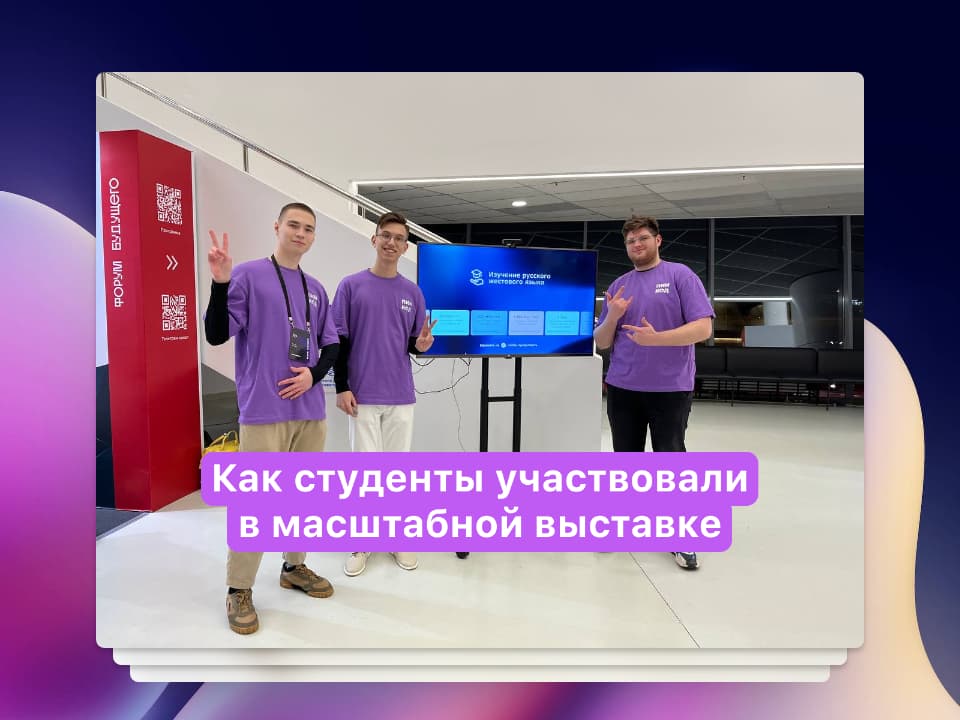
From December 5 to 8, 2023, Yekaterinburg hosted the first IT congress and exhibition "Future Forum", supported by Russia's Ministry of Digital Development and the Sverdlovsk Region government. The event focused on digital industry growth and information security solutions.
Our team participated as an exhibitor with a demo version of our Russian Sign Language learning service (you can read the article about it here). In short, we use a gesture recognition model to evaluate whether a person signed correctly. At the booth, visitors could learn 5 signs and try them in practice.
Why we decided to participate
Our product is a unique solution in its field – it not only demonstrates the recognition technology we built, but also enables real-time interaction: people can learn signs on the spot and leave with positive emotions. An exhibition is a great platform for presenting the product in person.
Our main goal was to draw attention to an important social issue: creating an inclusive environment for people with hearing impairments. The exhibition already attracted visitors interested in new tech and willing to listen and explore – a perfect opportunity to deliver our message.
We had to negotiate participation...
On the evening of November 28 (a week before the exhibition), our project manager Roman saw an invitation post in the institute group chat. He immediately thought of reaching out to the organizers to try and secure a spot. The timeline was tight, but the leadership understood our situation and allowed us to participate. Booth space and equipment would have cost a pretty penny – money we obviously didn't have. The organizers met us halfway, and Roman negotiated free participation (yes, students) on the condition that we bring our own equipment.
Many thanks to the Future Forum organizers, everyone who helped us during the exhibition, and special thanks to Maria Suetina for giving us the opportunity to participate.
How we set up the booth
We didn't have our own equipment either 😁, but our beloved IRIT-RTF UrFU kindly provided a minimal kit for poor student exhibitors: a TV, a stand, a webcam, a laptop pedestal, and a clicker.
The day before the exhibition, our institute was delivering equipment for another part of the event – Cyber Drills – to a neighboring building, and that's where we picked up our starter pack.
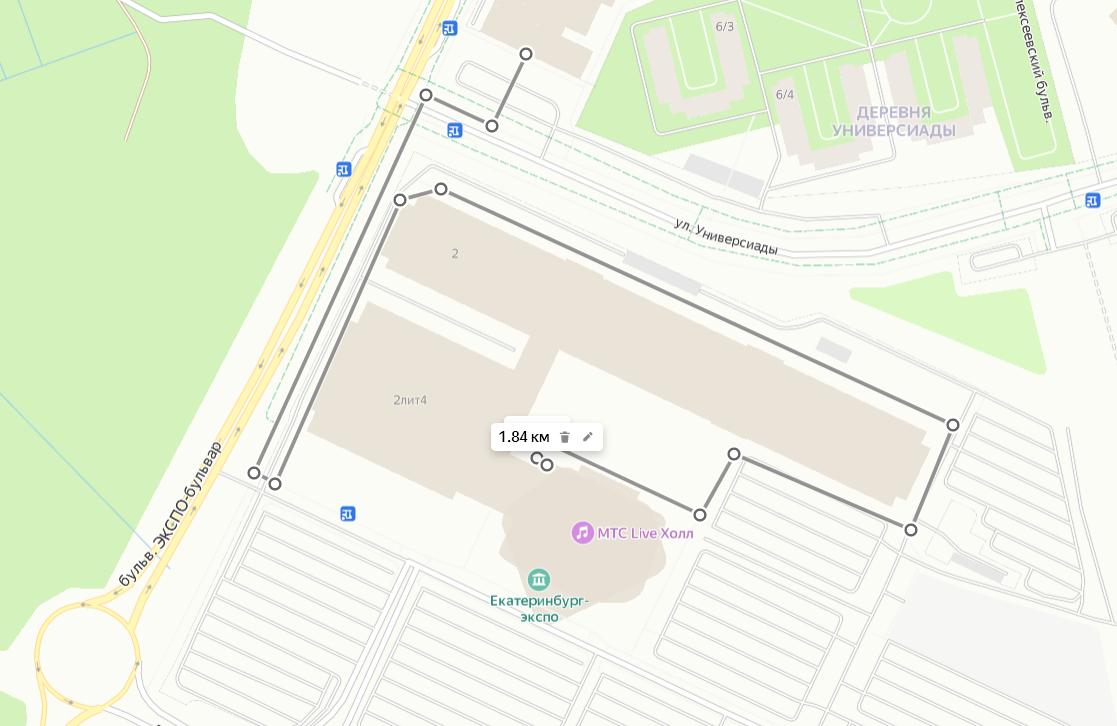
On paper and on the map it sounds easy: "neighboring building". In reality, it took a titanic effort to get everything to the venue. In total, we walked 5.5 km.
Exhibition days
On the first day we arrived early to set up the equipment and finish decorating the booth. We put stickers on the pedestal – turned out "questionable, but okay". We tested the booth rewritten for the clicker – everything worked well.
It was quite hard and unusual to spend the whole day attracting people, explaining the problem we solve to everyone, showing and guiding them through our booth. But the emotions of people who light up when their gestures are actually recognized kept us going until the very end.
At the end of the first day, we unanimously agreed that some gestures had recognition issues: "you" and "I" were recognized poorly against the background of people walking by, because the recognition model's dataset was recorded in a "I'm sitting in front of a laptop, looking at the webcam" format – gestures were supposed to be recognized in that position, not while standing in a crowd.
On the second day we added booth settings – you could change the evaluation mode (show all recognized words or only the score) and the number of words (you could remove words that were recognized poorly). Important guests were expected: our institute director, notable speakers, TV hosts, and even the governor.
There were more people that day, but we held up confidently and handed out our contacts left and right (people asked for them themselves). Ilya Nikolaevich Obabkov, Pavel Lvovich Reznik, Yuri Yuryevich Chernyshov, and many other remarkable visitors stopped by our booth. We got a ton of feedback, contacts, and kind words.
Some statistics
Over two exhibition days
- 3,500 people from 100 Russian cities attended the event
- 42 exhibitors from 10 regions were represented
- 188 speakers presented across 36 sections
- 15 cooperation agreements were signed between major companies and government organizations
At our booth
- 132 people learned 5 Russian Sign Language signs
- The system recognized over 3,000 gestures
- Our Habr QR code was scanned more than 40 times
- We spent 17.5 hours demonstrating our product
Takeaways
We gained invaluable experience participating in this exhibition. It felt great to realize we'd reached a level where we stood alongside Yekaterinburg's IT giants.
If you're a student – don't be afraid to try participating in events like this. What if it works out? 😉
If you represent a serious company – learn to attract and engage people at your booths. They came to the exhibition for more than brochures! 📝
If you're an exhibition visitor – don't hesitate to show gratitude and emotions at good booths. People really put effort into them! 🙂
If you organize exhibitions – take note: give energized unknowns a chance. It's a kind gesture that exhibitors and visitors alike will remember. ✨